Milos isola - Foca Monaca


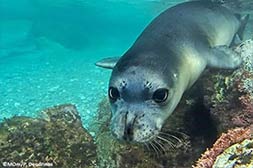
Protetta dagli dei Poseidone ed Apollo, considerata portatrice di fortuna, la foca monaca è un "carnivoro", famiglia "phocidae" e sottospecie "monchinae" o monachus monachus: non è un pesce, è un mammifero!

Storicamente, la popolazione in tempi andati era numerosa, ma con il passare dei secoli lo sfruttamento per la pelliccia, l'olio, la carne, medicinali, e vestiario e la pesca industriale, e oggi i pescatori con le reti, hanno ridotto la specie a poche centinaia di unità, in aree ben definite.

Citando il sito http://www.monachus-guardian.org "Le nazioni e gruppi di isole dove la foca monaca è stata estirpata nel 20.mo secolo includono la Francia e la Corsica, la Spagna e le Isole Baleari , la Sicilia e l'Arcipelago Toscano, Egitto, Israele, Libano e Tunisia. Sembra sia estinguendosi anche nel Mar Nero e della Marmara, nelle coste adriatiche e in Croazia. Malgrado qualche avvistamento sporadico, sembra sia scomparsa anche in Sardegna. Questa distruzione ha lasciato due aree di sopravvivenza: il Mediterraneo orientale e il Nord Atlantico, verso le coste dell'Africa occidentale".

Kimolos , con le sue coste scoscese e grotte, di origine vulcanica, è uno dei pochi rifugi della foca monaca. L'area è protetta da organizzazioni internazionali e greche, che hanno sviluppato programmi per la sopravvivenza della foca. A Milos ne esistono alcuni esemplari.

Girando l'isola per mare, si può essere fortunati ed incontrare uno di questa dozzina di foche sopravvissute. La foca monaca ha una lunghezza di circa 2,5 metri e pesa intorno ai 300 chili. La pelle superiormente è scura e coperta di un pelo corto; sotto il colore è più chiaro. La riproduzione avviene in 10 mesi, e la foca si nutre di pesci, seppie e polipi.

In Grecia, l'organizzazione che protegge la foca si chiama MOM, ha un rappresentante sull'isola, e svolge un programma di monitoraggio della specie, oltre che di sensibilizzazione a livello scolastico. La foca monaca vive nelle grotte, spesso con entrata sottomarina, ove si riproduce.

Lo scrivente ricorda un tramonto bellissimo nella parte occidentale dell'isola, ove all'improvviso apparve a pochi metri una testolina fuori acqua che curiosamente ci osservava in barca, come un nuotatore sorpreso nella sua proprietà. E' stata una immagine emozionante ed indimenticabile, ed anche un momento di riflessione su come l'uomo contribuisce alla distruzione delle specie viventi.

Milos Friends of the Animals

Milos Friends of the Animals was started in l987. The main aim of our group is to help stray animals in Milos who still suffer. We also try to help and advise owners of domestic animals if asked. Whilst much press is given to the more exotic animals that inhabit this area such as dolphins, monk seals, wild goats and sea turtles, these more everyday animals are not given much recognition.

We are a non-profit organization that relies solely on donations and volunteer work. Stray dogs and cats are given free therapy whilst a small charge is made when domestic animals are treated. We also operate a winter feeding program in some areas where colonies of cats remain after visitors have gone home.

The reason Milos Friends of the Animals was found was initially for the plight of stray cats in Pollonia. However, since then we have helped cats, dogs, mules, donkeys and birds and hopefully given many a longer and happier life. Of course on many occasions people find abandoned animals. We cannot offer to take in these strays, as we have no facilities to do so however, we always will try to advise on what can possibly be done to help.

In the past we have assisted the police in rescues and on one occasion we even traced a stolen cat and returned him to his owner! S and B Mineral Mining Co. have also had many of the stray colonies of cats around their factory sterilized.

One more of our activities is to organize neutering programmes and vet's visits on Milos. As anyone who has visited Greece will know, many of the strays are tame and easy to catch for neutering. Others, however, are quite a different story and require traps, expertise and a great deal of patience! But we (nearly always) get there in the end.

Neutered animals are healthier; they fight less and can concentrate on looking after themselves without having to fight for territory or struggle to bring up their young on the street. Neutering puts an end to many unwanted animals being born only to die from disease, starvation or poisoning.

By the end of 2O08 we had neutered nearly 75O cats and dogs and cared for many more, some of whom have been adopted and given good homes in Greece and abroad.

We have had visits supported by: The Violet Davie Animal Nursing Home in Sussex England (through Hellenic Animal Welfare Athens). Visits have also been made by The Greek Animal Welfare, London- England and The Friends of the Cats, Athens.

We continue to try to raise the status of these animals that man domesticated thousands of years ago. We hope you’ll agree they deserve a little help and respect.

We are a non profit charity in association with G.A.W.F. ΕΛΛΗΝΙΚΟ ΤΑΜΕΙΟ ΜΕΡΙΜΝΑΣ ΖΩΩΝ a registered charity in Greece number 881216.

For information and donation: http://www.milos-friendsoftheanimals.com/